
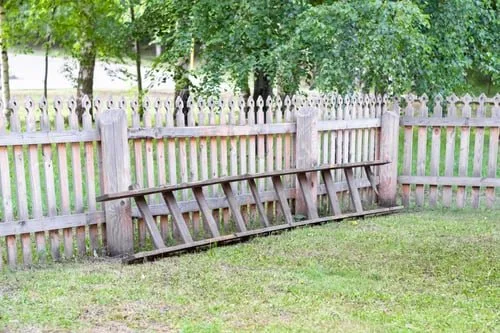
Drive through any older Vancouver neighbourhood and count the fences leaning into someone's yard. The boards on those fences are usually fine. The rails are usually fine. What failed, every single time, is the posts — and the posts failed because of decisions made in the first afternoon of the job, in a hole nobody photographed.
A fence post is a lever. Wind pushes on a large flat surface — and a solid cedar privacy fence is a very effective sail — and all of that force is concentrated at the point where the post enters the ground. The soil around the post is what resists it. So the two things that matter are how deep the post is set, and how well the material around it grips.
The working rule is that roughly a third of the total post length should be in the ground, and in the Lower Mainland it should never be less than about 60 cm — deeper for tall fences, deeper on corners and gate posts, and always below the frost line. Frost depth is modest here compared to the rest of Canada, but it is not zero, and a post set shallow will be lifted a little every time the ground freezes and dropped back slightly out of position every time it thaws. Do that for a few winters and the fence has visibly moved.
Concrete is what does the gripping, and how it is placed matters. The hole should be wider at the bottom than the top — a bell shape — so that a frost heave cannot simply lift the whole plug of concrete straight out of the ground like a cork. And the concrete should be crowned at the top, sloped away from the post, so that rain runs off it rather than sitting in a little reservoir around the timber. That single detail, a crowned collar instead of a flat or dished one, is worth years of post life in a climate that rains for eight months.
Below the concrete, put gravel. A post sitting on a sealed concrete floor at the bottom of the hole is standing in a bucket: water runs down the post, collects at the base, and has nowhere to go. Two or three inches of drainage gravel under the post lets that water escape into the ground instead of soaking into end grain. Rot in a cedar post almost always starts at the bottom of the post or right at the ground line, and both of those failures are drainage failures.
Then there is what the post is made of. Pressure-treated posts for anything in the ground, always, even on a cedar fence — the visible boards can be cedar, but the buried timber should be rated for ground contact. Gate posts get upsized and set deeper than the rest, because a gate is a heavy weight swinging on a lever arm all day and gate posts are the first thing to lean on any fence. And check the property line before anything goes in the ground, and call for utility locates, because both of those conversations are far cheaper to have before the auger comes out than after.
None of this is exotic and none of it is expensive relative to the cost of the fence. It is just slower, and it happens on day one when the client is not usually watching. That is exactly why it gets skipped. When we quote a fence we quote the post work honestly, because in five years the boards will still look like boards on every fence on the street — and the difference between ours and the cheap one will be whether the line is still straight.